

On November 1, 2025, Russia launched its newest nuclear-powered submarine, Khabarovsk, designed to carry the underwater nuclear drone Poseidon. This launch is significant as it underscores Russia's focus on enhancing its strategic naval deterrence amid escalating global security tensions.
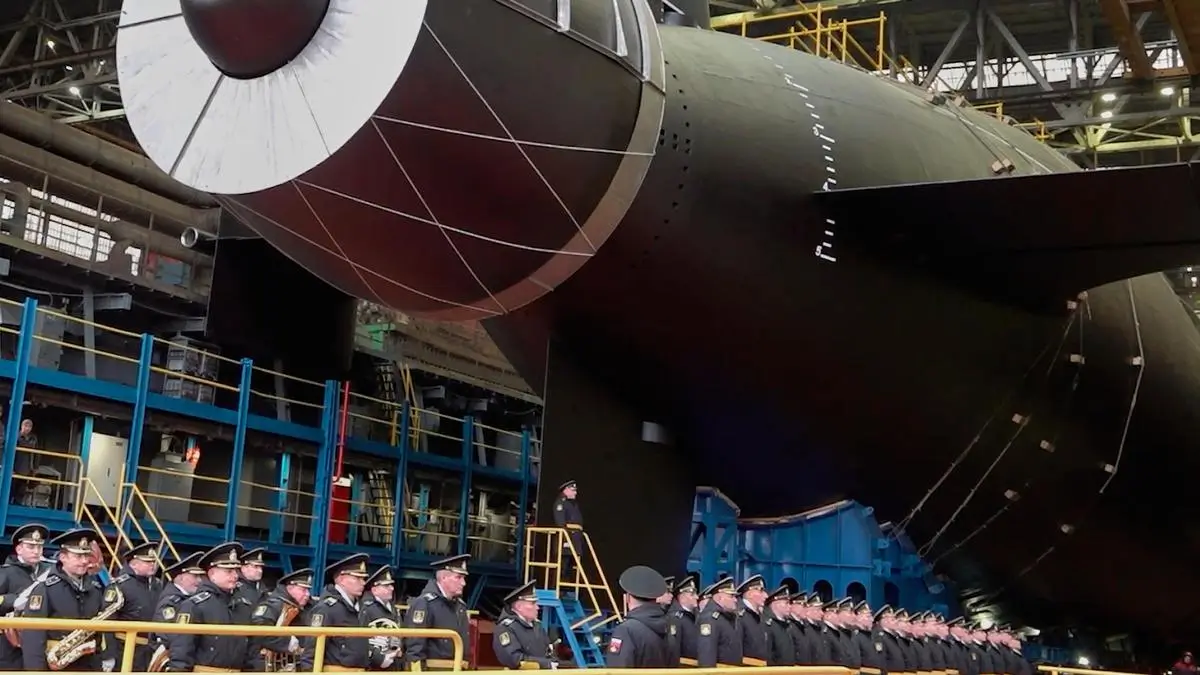
This topic is relevant for UPSC aspirants as it touches upon various aspects of defense strategy and international relations, particularly within the context of GS Paper II and III. It is crucial for understanding contemporary geopolitical dynamics and the implications of military modernization on global peace and stability. Aspirants should study this topic to grasp the intricacies of international security and defense strategies.
The Khabarovsk submarine is part of Russia's strategic submarine program, forming a vital component of its nuclear triad, which includes land and air-based platforms. These submarines are crucial for their stealth and second-strike capabilities, ensuring deterrence even in conflict scenarios. The Poseidon drone enhances this capability, designed for deep-sea operations and capable of evading missile defense systems.
In the Prelims, questions may focus on factual details such as the capabilities of the Khabarovsk submarine and the Poseidon drone. In the Mains, candidates could be asked to analyze the implications of such military developments on global security and discuss causes and effects of Russia's defense strategy.
The launch of Khabarovsk and the development of the Poseidon drone illustrate Russia's commitment to modernizing its military capabilities. This modernization reflects a broader trend among major powers investing in advanced military technologies, which complicates international security. The potential for these systems to disrupt existing arms control frameworks is significant, raising concerns about global stability and the escalation of arms races.
Moving forward, it is essential for international policymakers to address the challenges posed by new military technologies, including underwater weapons. Evidence-based policy decisions should focus on sustainability and resilience in international relations, promoting dialogue to maintain strategic balance and prevent conflicts. A comprehensive approach to arms regulation, considering the implications of autonomous and nuclear-powered systems, is vital for global security.
Q1. What is the significance of the Khabarovsk submarine launch?
Answer: The launch of the Khabarovsk submarine signifies Russia's commitment to enhancing its strategic naval deterrence and modernizing its nuclear capabilities amid rising global security tensions.
Q2. How does the Poseidon drone enhance Russia's military strategy?
Answer: The Poseidon drone enhances Russia's military strategy by providing a stealthy, nuclear-armed platform capable of long-range operations, thus reinforcing its second-strike capabilities against adversaries.
Q3. What role do nuclear submarines play in Russia's defense strategy?
Answer: Nuclear submarines are essential for Russia's defense strategy as they form a critical part of its nuclear triad, ensuring deterrence through stealth and second-strike capabilities in potential conflict scenarios.
Q4. How might Khabarovsk affect global arms control discussions?
Answer: The deployment of Khabarovsk could complicate global arms control discussions by introducing advanced underwater military technologies, prompting concerns about nuclear proliferation and regional stability.
Q5. What are the implications of Russia's military modernization on international security?
Answer: Russia's military modernization, exemplified by the Khabarovsk and Poseidon, raises concerns about an arms race and increases the complexity of international security dynamics, necessitating robust arms regulation frameworks.
 Kutos : AI Assistant!
