

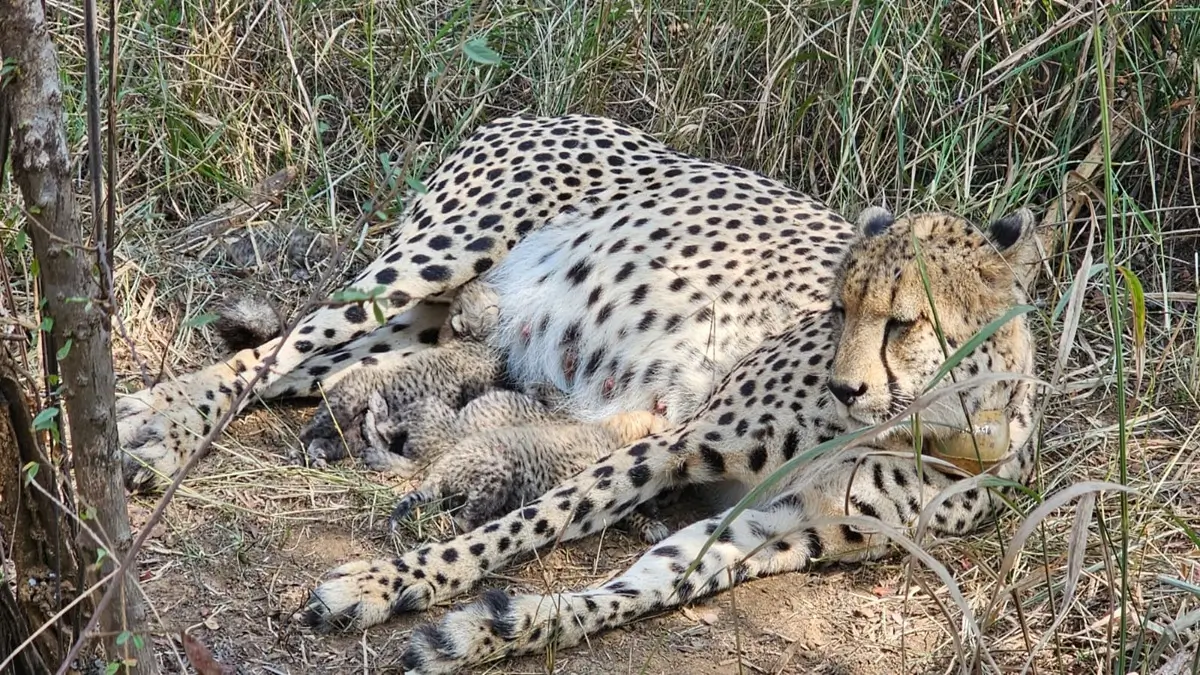
The recent birth of three cheetah cubs by Gamini at Kuno National Park is a significant development in India's wildlife conservation. This event marks the ninth successful cheetah litter since their reintroduction to India, reflecting ongoing efforts to restore the cheetah population, which was declared extinct in 1952.
This topic holds relevance for UPSC aspirants in various contexts:
Understanding this topic is crucial for UPSC aspirants as it encompasses current affairs related to environmental policies and wildlife management.
Project Cheetah is a pioneering initiative aimed at reintroducing the cheetah into Indian ecosystems through the world's first inter-continental translocation of a large carnivore. In 2022-2023, this involved the relocation of 20 cheetahs from Namibia and South Africa to India. The successful births of cubs signify a positive trend in establishing a sustainable cheetah population in the country.
In the Prelims, questions can focus on specific facts such as the number of cubs born, the origin of the cheetahs, and the location of the project. In contrast, Mains questions may explore the causes and implications of reintroducing an extinct species, evaluating the success of Project Cheetah, and discussing the broader impact on biodiversity and ecosystem balance.
The successful birth of the cubs illustrates the effectiveness of wildlife translocation strategies. It highlights the importance of maintaining genetic diversity for the long-term survival of endangered species. Moreover, these efforts play a critical role in restoring ecological balance and enhancing the resilience of ecosystems in India.
To ensure the sustainability of cheetah populations, it is essential to implement evidence-based policies that promote habitat conservation and community involvement in wildlife management. Future strategies should focus on enhancing ecosystem resilience and monitoring the health of reintroduced populations to mitigate potential challenges.
Q1. What is Project Cheetah?
Answer: Project Cheetah is an initiative aimed at reintroducing cheetahs to India, marking the first inter-continental translocation of a large carnivore, which began in 2022.
Q2. How many cubs has Gamini given birth to?
Answer: Gamini has given birth to three cubs, bringing the total number of Indian-born cheetah cubs to 27.
Q3. Where are the cheetahs being reintroduced in India?
Answer: The cheetahs are being reintroduced in Kuno National Park, Madhya Pradesh, which is a designated area for their rehabilitation.
Q4. Why is the birth of these cubs significant?
Answer: The birth signifies successful breeding under Project Cheetah, crucial for establishing a sustainable cheetah population in India.
Q5. What impact does Project Cheetah have on biodiversity?
Answer: Project Cheetah aims to restore ecological balance and enhance biodiversity by reintroducing a key predator into the ecosystem.
Question 1: What is the main objective of Project Cheetah?
A) Reintroducing tigers to India
B) Restoring the cheetah population
C) Protecting forests
D) Increasing elephant numbers
Correct Answer: B
Question 2: How many cheetahs were initially brought to India under Project Cheetah?
A) 10
B) 15
C) 20
D) 25
Correct Answer: C
Question 3: Where was the first release of cheetahs conducted in India?
A) Jim Corbett National Park
B) Kuno National Park
C) Ranthambore National Park
D) Kaziranga National Park
Correct Answer: B
Question 4: In what year was the first batch of cheetahs released in India?
A) 2020
B) 2021
C) 2022
D) 2023
Correct Answer: C
Question 5: What is the current total cheetah population in India as per recent reports?
A) 25
B) 30
C) 38
D) 45
Correct Answer: C
 Kutos : AI Assistant!
