

The 126th birth anniversary of Sardar Udham Singh, observed on 26 December 2026, serves as a poignant reminder of India’s relentless struggle for justice during the colonial period. He is remembered as a revolutionary who devoted his life to avenging the Jallianwala Bagh massacre. Udham Singh holds a unique position in the history of the Indian National Movement, embodying sacrifice, patience, and a commitment to justice against imperial oppression.
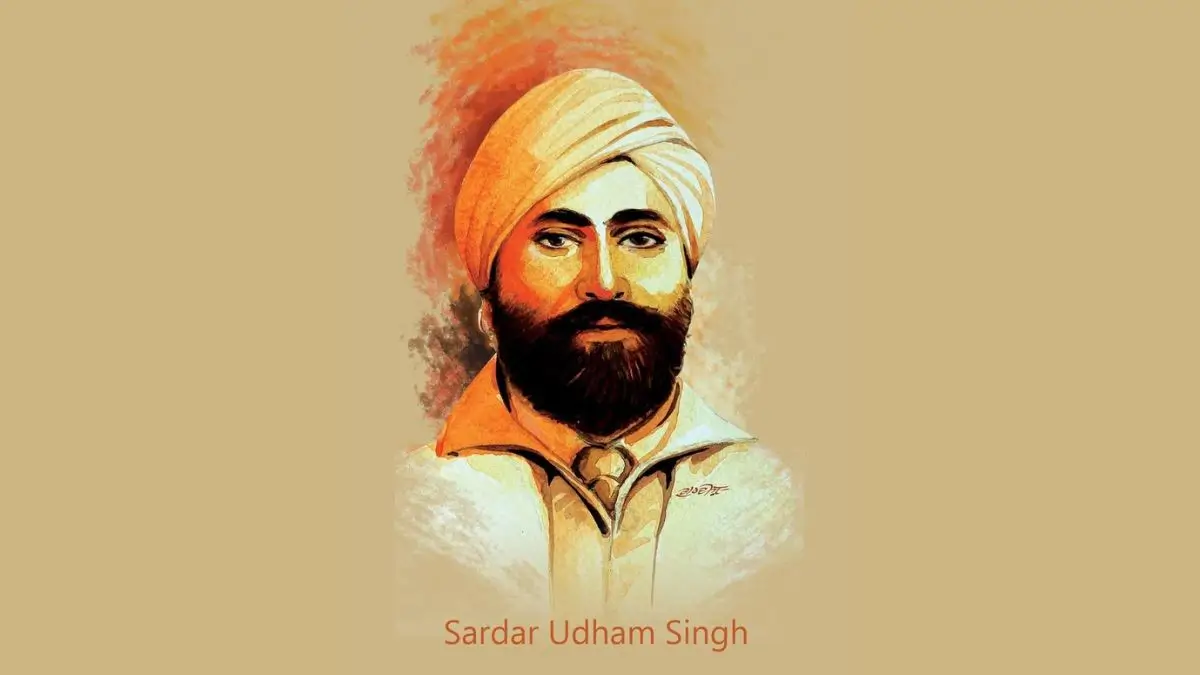
Sardar Udham Singh was born on 26 December 1899 in Sunam, located in the Sangrur district of Punjab. Orphaned at an early age, he grew up in the Central Khalsa Orphanage in Amritsar, where nationalist ideas and the realities of British rule shaped his early life. His formative years were marked by deprivation and discipline, which instilled a strong sense of justice and resistance to colonial authority.
A pivotal event in Udham Singh’s life was his presence during the Jallianwala Bagh massacre on 13 April 1919. On that day, British troops under Reginald Dyer opened fire on thousands of unarmed civilians in Amritsar. Over 400 lives were lost, and many more were injured. The massacre occurred under the administration of Michael O’Dwyer, the then Lieutenant Governor of Punjab. Surviving the tragedy left a lasting impact on Udham Singh and fueled his revolutionary pursuits.
Deeply traumatized by the events at Jallianwala Bagh, Udham Singh committed himself to ending British rule. He joined the Ghadar Party in 1924, an overseas organization aimed at mobilizing Indians against colonial oppression. His travels allowed him to connect with fellow revolutionaries and spread anti-colonial sentiments. However, his activities led to arrest in 1927 for possession of firearms, resulting in a five-year prison sentence that only strengthened his resolve.
Udham Singh’s most significant act occurred on 13 March 1940, when he assassinated Michael O’Dwyer during a public meeting at Caxton Hall in London. This was not a spur-of-the-moment decision but a calculated act to hold accountable one of the key figures behind the Jallianwala Bagh massacre. During his trial, he declared that his actions were driven by justice rather than personal vendetta, showcasing his ideological conviction.
After the assassination, Udham Singh was arrested, tried, and sentenced to death by British authorities. He was executed on 31 July 1940 at Pentonville Prison in London, which transformed him into a martyr of the freedom struggle. He is honored as Shaheed-i-Azam Udham Singh, reflecting the respect and admiration for his sacrifice and bravery.
Udham Singh’s legacy continues to inspire generations, even post-independence. In 1974, his remains were repatriated to India, symbolizing national honor. Numerous memorials, museums, and institutions, especially in Punjab, have been named after him. His life epitomizes the quest for justice, demonstrating how individual resistance rooted in moral conviction can challenge even the most formidable powers.
Q1. What was the significance of Udham Singh's actions?
Answer: Udham Singh's assassination of Michael O'Dwyer was a pivotal act of revenge for the Jallianwala Bagh massacre, symbolizing the struggle against colonial oppression and inspiring future generations.
Q2. How did Udham Singh's early life shape his revolutionary ideas?
Answer: Growing up in an orphanage and experiencing the harsh realities of British rule instilled in Udham Singh a strong sense of justice and resistance, which fueled his revolutionary fervor.
Q3. What was the Ghadar Party's role in the independence movement?
Answer: The Ghadar Party was instrumental in mobilizing Indians abroad to resist British colonial rule, advocating for independence through revolutionary means and connecting like-minded individuals.
Q4. Why is Udham Singh considered a martyr?
Answer: Udham Singh is regarded as a martyr because he sacrificed his life for the cause of India's freedom, highlighting his commitment to justice and inspiring future freedom fighters.
 Kutos : AI Assistant!
