

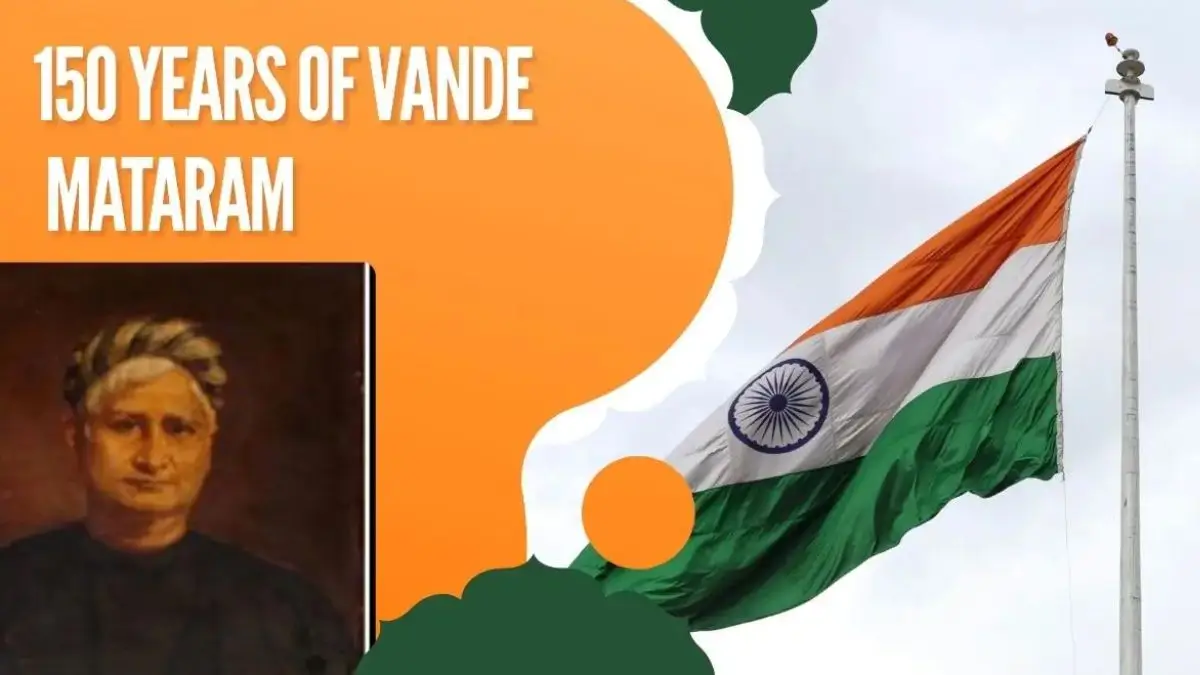
The Union Home Ministry has recently issued new guidelines regarding the performance of Vande Mataram during official events. This directive, dated January 28, 2026, establishes a formal protocol for the National Song, coinciding with the 150th anniversary celebration of Vande Mataram. This makes it crucial for UPSC aspirants to understand its implications for national identity and cultural heritage.
This topic is relevant for UPSC Prelims as it touches upon cultural heritage and national identity, both of which are essential components of the Indian Polity syllabus. In the Mains examination, it is pertinent to GS Paper I (Indian Heritage and Culture) and GS Paper II (Social Justice). Understanding these guidelines is vital for aspirants to grasp the evolving nature of national symbols and their role in civic education.
Vande Mataram, composed by Bankim Chandra Chattopadhyay in the 1870s, holds profound significance as a national song. It was adopted as India's National Song in 1950. The new MHA guidelines mandate that all six stanzas be sung before the National Anthem during official events, marking a departure from previous practices where only the first two stanzas were commonly performed. This structured protocol aims to instill respect and uniformity during national ceremonies.
In the Prelims, candidates may encounter questions regarding the specifics of the MHA guidelines, such as the order of performance or the significance of Vande Mataram. In Mains, questions could delve into the implications of the guidelines for national identity, civic education, and the historical context of Vande Mataram as a symbol of India’s freedom struggle.
The introduction of these guidelines reflects a strategic move towards reinforcing national identity and unity through cultural symbols. By mandating the full rendition of Vande Mataram, the government underscores its historical significance and aims to foster a sense of respect for national symbols. This initiative could also have broader implications for civic education, ensuring that future generations appreciate the importance of patriotism and cultural heritage.
Moving forward, it is essential for educational institutions and public bodies to actively promote these guidelines, ensuring that Vande Mataram is recognized not just as a song, but as a vital component of India's cultural fabric. Evidence-based policies should support the integration of civic values into educational curriculums, fostering a generation that upholds the principles of respect, dignity, and national pride.
Q1. What are the new MHA guidelines for Vande Mataram?
Answer: The MHA guidelines mandate that all six stanzas of Vande Mataram must be sung before the National Anthem at official events, promoting uniformity and respect.
Q2. Why is Vande Mataram significant in Indian culture?
Answer: Composed in the 1870s, Vande Mataram became a powerful symbol during India's freedom struggle and was adopted as the National Song in 1950, reflecting national identity.
Q3. What occasions require the performance of Vande Mataram?
Answer: Vande Mataram should be performed during events like flag unfurling, significant public gatherings, and cultural functions, as per the new MHA guidelines.
Q4. How does the MHA address public decorum during Vande Mataram performances?
Answer: The MHA emphasizes that audiences must stand in attention during the performance, except when it is part of a documentary or newsreel.
Q5. What role do schools play in promoting Vande Mataram?
Answer: Schools are encouraged to begin activities with Vande Mataram, fostering respect for national symbols and promoting civic values among students.
Question 1: What is the primary purpose of the new MHA guidelines on Vande Mataram?
A) To promote cultural heritage
B) To mandate public performance
C) To establish a performance protocol
D) To celebrate its anniversary
Correct Answer: C
Question 2: Which stanzas of Vande Mataram are mandated to be sung at official events?
A) First two stanzas
B) All six stanzas
C) Only the chorus
D) Selected stanzas
Correct Answer: B
 Kutos : AI Assistant!
