

The Earth is home to incredible natural wonders, many of which lie hidden beneath the ocean's surface. Underwater, vast mountains, extensive ridges, and enigmatic landscapes remain largely unseen by the public. These features stretch across great distances and play a significant role in shaping our planet.
The world’s longest mountain range is known as the Mid-Ocean Ridge (MOR), and it exists entirely underwater. Spanning over 65,000 kilometers, it is the largest continuous mountain system on Earth. This immense chain runs like a long seam around the globe, traversing through major oceans.
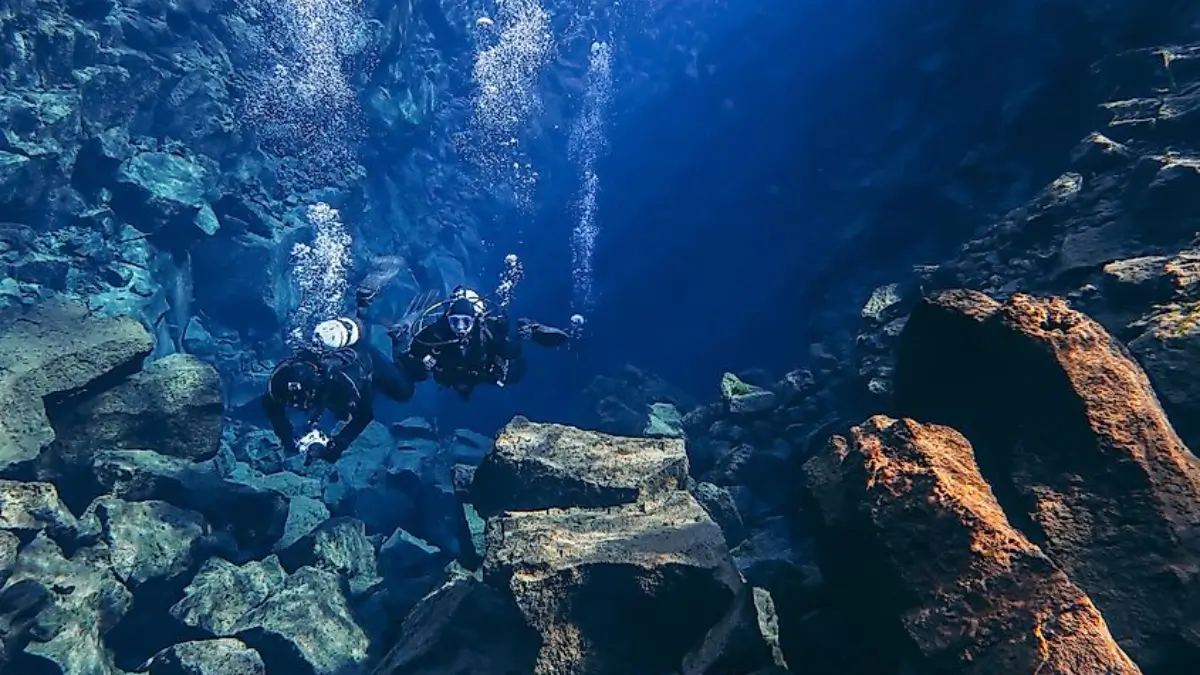
The Mid-Ocean Ridge is formed at the boundaries where tectonic plates diverge. As these plates gradually move apart, hot molten rock, or magma, rises from the mantle, cooling to create new ocean floor. This natural phenomenon, referred to as seafloor spreading, continuously adds fresh crust to the ocean bed.
The MOR is recognized as the largest volcanic feature on the planet. Along its length, numerous underwater volcanoes and fissures can be found. Most of Earth’s volcanic activity occurs here, far beneath the surface of the ocean.
One remarkable aspect of the MOR is its hydrothermal vents, which emit extremely hot, mineral-rich water. These vents provide a habitat for rare marine organisms, such as giant tube worms and unique shrimp that thrive in the absence of sunlight. Instead of relying on photosynthesis, these creatures utilize chemosynthesis, a process driven by chemicals released from the vents.
The tallest underwater mountain is Mauna Kea in Hawaii. Although only a portion of it rises above sea level, its total height from the ocean floor exceeds 10,000 meters, making it taller than Mount Everest when measured from its base to peak.
While the Mid-Ocean Ridge holds the title for the longest mountain range both underwater and overall, the Andes Mountains in South America are the longest mountain range found entirely on land, stretching around 7,000 kilometers.
Q1. What is the Mid-Ocean Ridge?
Answer: The Mid-Ocean Ridge is the longest underwater mountain range, extending over 65,000 km and formed by tectonic plate movements leading to seafloor spreading.
Q2. How is the Mid-Ocean Ridge formed?
Answer: It is formed when tectonic plates move apart, allowing magma to rise and cool, creating new oceanic crust and contributing to the ocean floor's formation.
Q3. What types of life exist near the Mid-Ocean Ridge?
Answer: Unique deep-sea life thrives around hydrothermal vents, including organisms like giant tube worms and specialized shrimp that rely on chemosynthesis for energy.
Q4. Why is the Mid-Ocean Ridge important?
Answer: It plays a critical role in plate tectonics, volcanic activity, and supports unique ecosystems that contribute to our understanding of life in extreme environments.
Q5. How does the Mid-Ocean Ridge compare to other mountain ranges?
Answer: While it is the longest mountain range overall, the Andes are the longest mountain range on land, showcasing the diversity of Earth's geological features.
Question 1: What is the primary feature of the Mid-Ocean Ridge?
A) It is a desert region
B) It is a mountain range found on land
C) It is the longest underwater mountain range
D) It is the highest peak in the world
Correct Answer: C
Question 2: What process leads to the formation of new ocean floor at the Mid-Ocean Ridge?
A) Seafloor erosion
B) Tectonic plate divergence
C) Subduction
D) Sedimentation
Correct Answer: B
Question 3: Which organisms are typically found near hydrothermal vents?
A) Photosynthetic algae
B) Giant tube worms
C) Land mammals
D) Freshwater fish
Correct Answer: B
Question 4: How fast can some parts of the Mid-Ocean Ridge spread?
A) 1 cm per year
B) 5 cm per year
C) 10 cm per year
D) 20 cm per year
Correct Answer: D
Question 5: Which is the only location where the Mid-Ocean Ridge is above sea level?
A) Hawaii
B) Iceland
C) Australia
D) Africa
Correct Answer: B
 Kutos : AI Assistant!
