

The recent visit of Prime Minister Narendra Modi to Malaysia is significant due to the signing of 11 bilateral agreements aimed at enhancing diplomatic and economic ties. This development is timely, considering the current global economic uncertainties and the strategic importance of the India-Malaysia relationship in regional stability and trade.
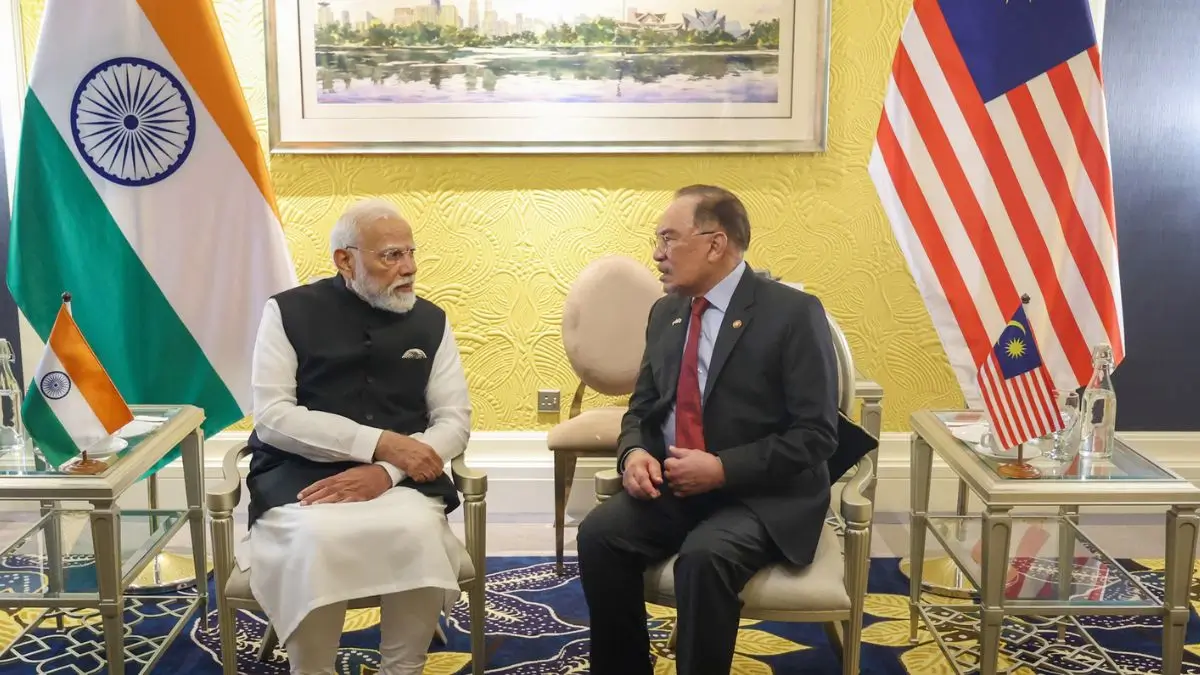
These developments are relevant for UPSC aspirants as they encompass various dimensions of international relations and economic policy. In terms of prelims, questions may focus on the specifics of the agreements and their implications. For mains, candidates should prepare for discussions related to GS Paper II (International Relations) and GS Paper III (Economic Development).
UPSC aspirants should study this topic to understand the dynamics of India's foreign policy and its implications on trade, security, and regional cooperation.
The agreements signed during PM Modi's visit cover a wide range of areas, including trade, technology, payments, and security. A significant highlight is the promotion of local currency trade settlement between India and Malaysia, which aims to reduce dependence on third-party currencies and lower transaction costs. This move is poised to enhance bilateral trade and investment flows.
In the Prelims, questions may test knowledge on specific agreements and statistics regarding India-Malaysia trade relations. In contrast, Mains questions may explore the causes and implications of these agreements, including their impact on regional stability and economic development.
The agreements signify a strategic pivot towards local currency transactions, which can foster greater economic resilience and reduced vulnerability to global currency fluctuations. The focus on semiconductors and renewable energy aligns with global supply chain diversification efforts and clean energy commitments. Additionally, enhanced cooperation in defense and intelligence sharing reflects a shared vision for maintaining peace and stability in the Indo-Pacific region.
The recent developments in India-Malaysia relations underscore the need for sustained diplomatic engagement and strategic partnerships. Moving forward, both nations should focus on evidence-based policies that promote sustainability and resilience in trade and economic cooperation. Strengthening ties with ASEAN through comprehensive cooperation agreements will further enhance regional stability and economic growth.
Q1. What were the key outcomes of PM Modi's visit to Malaysia?
Answer: PM Modi's visit resulted in the signing of 11 agreements focused on trade, digital payments, and security, including local currency trade settlement to promote economic resilience.
Q2. How does local currency trade settlement benefit India and Malaysia?
Answer: It reduces dependence on third-party currencies, lowers transaction costs, and enhances financial resilience in bilateral trade, fostering stronger economic ties.
Q3. Why is cooperation in semiconductors important for India-Malaysia relations?
Answer: Semiconductor supply chains are crucial for technological advancement and economic security, making collaboration in this sector a strategic priority for both nations.
Q4. What role does palm oil play in India-Malaysia trade relations?
Answer: Malaysia's commitment to supplying sustainable palm oil is vital for India's food security and trade balance, emphasizing collaboration in oil palm cultivation.
Q5. How can these agreements impact the Indo-Pacific region?
Answer: Strengthened India-Malaysia ties enhance regional stability, promote economic cooperation, and reinforce commitments to counter-terrorism and maritime security in the Indo-Pacific.
Question 1: What is a key focus of the agreements signed during PM Modi's visit to Malaysia?
A) Local currency trade settlement
B) Military alliances
C) Cultural exchange programs
D) Space exploration cooperation
Correct Answer: A
Question 2: How many agreements were signed between India and Malaysia during the recent visit?
A) 5
B) 8
C) 11
D) 15
Correct Answer: C
Question 3: Which organization is involved in the digital payments partnership between India and Malaysia?
A) World Bank
B) NPCI International Limited
C) ASEAN
D) International Monetary Fund
Correct Answer: B
Question 4: Which sector is highlighted for collaboration in the context of clean energy?
A) Coal mining
B) Solar energy
C) Nuclear energy
D) Hydroelectric power
Correct Answer: B
Question 5: What is a significant implication of the local currency trade agreement?
A) Increased reliance on USD
B) Lower transaction costs
C) Decreased trade volume
D) Reduced foreign investments
Correct Answer: B
Question 6: Which agreement aims to facilitate trade between India and ASEAN?
A) AITIGA
B) RCEP
C) TPP
D) NAFTA
Correct Answer: A
 Kutos : AI Assistant!
