

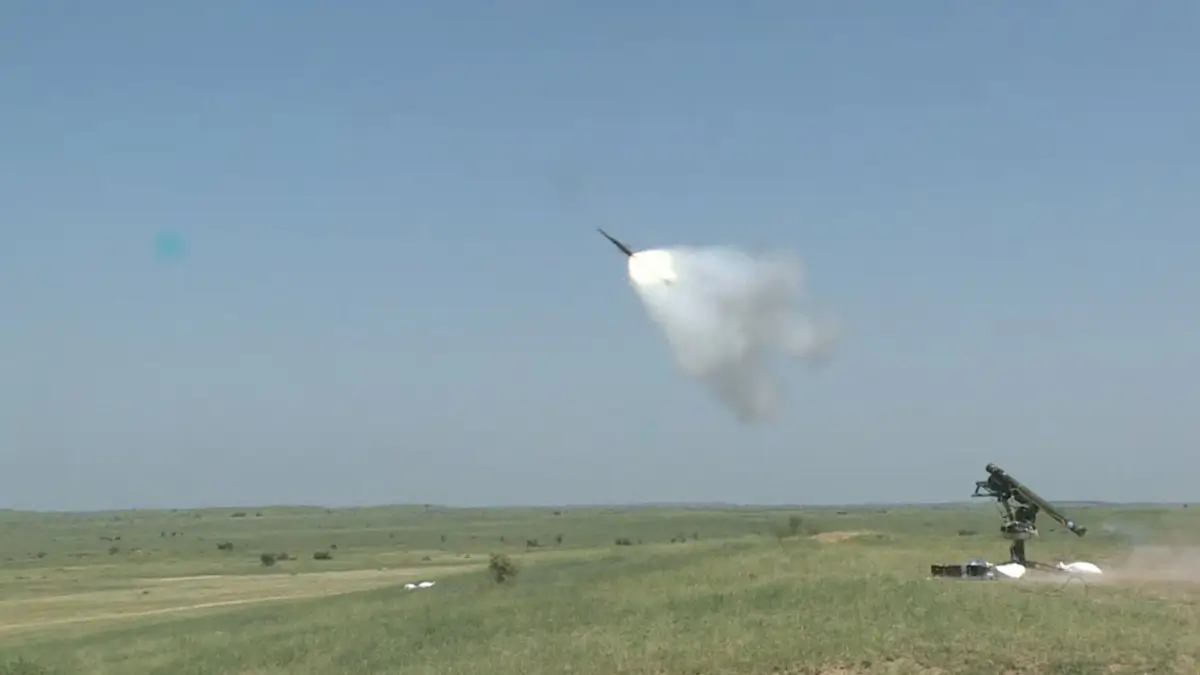
The recent successful test firing of the Strela-10 Very Short Range Air Defence System (VSHORADS) by the Indian Army is significant due to escalating aerial threats globally. This exercise, conducted at the Pokhran Field Firing Range, highlights India's commitment to enhancing its defensive capabilities, especially in light of recent tensions in the region. Such developments are crucial for the UPSC aspirants as they reflect current military advancements and national security concerns.
This topic is relevant for UPSC Prelims under current affairs and military technology, while in Mains, it pertains to GS Paper III (Defence and Security). Understanding the technical aspects and strategic implications of the Strela-10 system is vital for aspirants to grasp the evolving nature of air defence in India.
The Strela-10 is a mobile air defence system designed to engage low-altitude aerial threats, including aircraft and drones. Launched from a BMP-based platform, it operates within an effective range of 6 to 10 kilometers. Unlike traditional systems, it relies heavily on visual target acquisition, necessitating rigorous training and situational awareness among personnel.
In Prelims, candidates may be asked about the specifications and capabilities of the Strela-10 system, including its operational range and target types. In Mains, questions could focus on the implications of such military advancements for India's national security and the strategic importance of indigenous defence development.
The successful test of the Strela-10 system reflects India's proactive approach to countering evolving aerial threats. The reliance on visual acquisition highlights the necessity of training in diverse terrains. Additionally, strengthening domestic defence capabilities through indigenous systems fosters self-reliance and enhances strategic autonomy, which is essential for national security in a complex geopolitical landscape.
To ensure sustainable security, India must continue investing in advanced defence technologies, including air defence systems like the Strela-10. Emphasizing evidence-based policy and regular training exercises will enhance resilience against aerial threats. This strategic focus on military readiness and indigenous development is vital for maintaining ecosystem balance in national security.
Q1. What is the significance of the Strela-10 VSHORADS system?
Answer: The Strela-10 VSHORADS system is crucial for countering low-altitude aerial threats, enhancing India's air defence capabilities against evolving challenges.
Q2. How does the Strela-10 system operate?
Answer: The Strela-10 operates by launching missiles from a mobile platform, relying on visual target acquisition for accurate engagement of low-flying threats.
Q3. Why is the test conducted in Pokhran significant?
Answer: The Pokhran desert provides a challenging environment, ensuring that air defence units are prepared for real combat scenarios under extreme conditions.
Q4. What is the engagement range of the Strela-10 system?
Answer: The Strela-10 has an effective engagement range of approximately 6 to 10 kilometers, suitable for neutralizing various aerial threats.
Q5. How does the Strela-10 contribute to India's national security?
Answer: The Strela-10 enhances India's capability to safeguard national airspace by effectively countering modern aerial threats, thereby strengthening overall security.
Question 1: What type of threats is the Strela-10 system designed to counter?
A) High-altitude bombers
B) Low-flying aircraft and drones
C) Space-based missiles
D) Naval vessels
Correct Answer: B
Question 2: In which location was the Strela-10 test firing conducted?
A) Rajasthan
B) Punjab
C) Kashmir
D) Gujarat
Correct Answer: A
Question 3: What is the primary method of target acquisition used by the Strela-10?
A) Radar-based systems
B) Visual target acquisition
C) Infrared tracking
D) Satellite guidance
Correct Answer: B
Question 4: Which GS Paper is relevant for the topic of air defence systems in UPSC Mains?
A) GS Paper I
B) GS Paper II
C) GS Paper III
D) GS Paper IV
Correct Answer: C
Question 5: What is the effective engagement range of the Strela-10 system?
A) 3-5 kilometers
B) 6-10 kilometers
C) 11-15 kilometers
D) 16-20 kilometers
Correct Answer: B
 Kutos : AI Assistant!
