

The India-Netherlands Hydrogen Fellowship Programme launched on February 10, 2026, signifies a pivotal step in enhancing collaboration in green hydrogen research. This initiative is particularly relevant as nations strive towards energy security and climate goals, making hydrogen technologies increasingly vital for sustainable development.
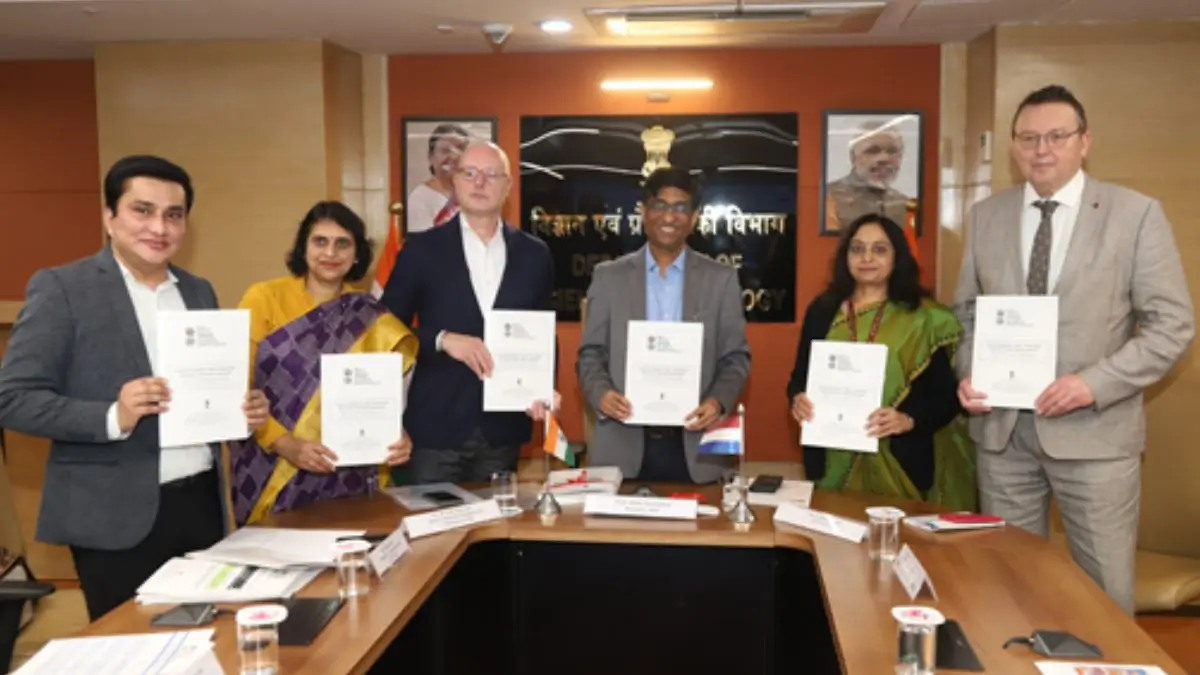
For UPSC aspirants, this topic holds significance in both Prelims and Mains examinations. In Prelims, it relates to current affairs about international collaborations in clean energy. For Mains, it connects to GS Paper III under topics like renewable energy and climate change. Understanding this initiative is essential for grasping India’s transition to a sustainable energy future.
The India-Netherlands Hydrogen Fellowship Programme aims to train Indian researchers in advanced hydrogen ecosystems. Launched by Abhay Karandikar from the Department of Science and Technology, this initiative underscores the importance of skill development and research capacity in emerging hydrogen technologies. It seeks to integrate Indian efforts with Dutch expertise, particularly in large-scale hydrogen systems.
In Prelims, questions may focus on the specifics of the Hydrogen Fellowship Programme, such as the countries involved, objectives, and key areas of research. Mains questions may require an analysis of the implications of this collaboration on India’s energy policies and strategies for achieving sustainability in energy production.
The collaboration with the Netherlands, a leader in hydrogen infrastructure, enables Indian researchers to adopt best practices in hydrogen deployment. This partnership is expected to enhance India’s capacity in energy logistics and industrial integration of hydrogen, thereby contributing to a robust energy transition strategy. The implementation of these technologies can significantly impact sectors that are challenging to decarbonize.
To achieve its energy independence goals and align with climate commitments, India must continue to foster international collaborations like the Hydrogen Fellowship Programme. This initiative not only advances research but also builds the necessary technical readiness for hydrogen deployment. Future policies should emphasize sustainability, resilience, and the integration of evidence-based strategies to facilitate the growth of a global hydrogen economy.
Q1. What is the India-Netherlands Hydrogen Fellowship Programme?
Answer: The Hydrogen Fellowship Programme is a collaborative initiative launched in 2026 to train Indian researchers in advanced hydrogen technologies, enhancing research capacity and promoting clean energy solutions.
Q2. Who is eligible to apply for the Hydrogen Fellowship?
Answer: Indian doctoral scholars, postdoctoral researchers, and faculty members from recognized institutions are eligible to apply for the fellowship.
Q3. What are the key focus areas of the fellowship?
Answer: The fellowship emphasizes system integration, hydrogen safety standards, techno-economic analysis, life-cycle assessment, and pathways for indigenization of hydrogen technologies.
Q4. How does the fellowship align with India's energy goals?
Answer: It supports India's National Green Hydrogen Mission and aims to contribute to achieving energy independence and net-zero emissions by 2070 through research and collaboration.
Q5. What is the significance of the MoU with the University of Groningen?
Answer: The MoU facilitates long-term collaboration in hydrogen research, enabling faculty and student exchanges and joint research projects, thus enhancing academic cooperation in clean energy.
Question 1: What is the primary objective of the India-Netherlands Hydrogen Fellowship Programme?
A) To promote steel production
B) To train researchers in hydrogen technologies
C) To enhance coal-based energy
D) To develop nuclear energy systems
Correct Answer: B
Question 2: Which institution facilitated the launch of the Hydrogen Fellowship Programme?
A) Ministry of Environment
B) Department of Science and Technology
C) Ministry of Education
D) Ministry of Renewable Energy
Correct Answer: B
Question 3: What is a key feature of the MoU between the University of Groningen and IITs?
A) Financial commitments
B) Enhanced faculty salaries
C) Joint research projects and exchanges
D) Focus on fossil fuel research
Correct Answer: C
Question 4: Which sector is emphasized for hydrogen technology deployment?
A) Agriculture
B) Heavy transport
C) Pharmaceutical
D) Textile
Correct Answer: B
Question 5: What does the Hydrogen Fellowship Programme aim to strengthen in India?
A) Coal mining capabilities
B) Technical readiness for hydrogen deployment
C) Nuclear energy policies
D) Oil refining processes
Correct Answer: B
 Kutos : AI Assistant!
