

India and Oman have recently formalized a Comprehensive Economic Partnership Agreement (CEPA). This landmark agreement is a significant step in India’s economic engagement with the Gulf region. It aligns with the country’s strategy to establish high-quality trade agreements with economies that do not directly compete with its own.
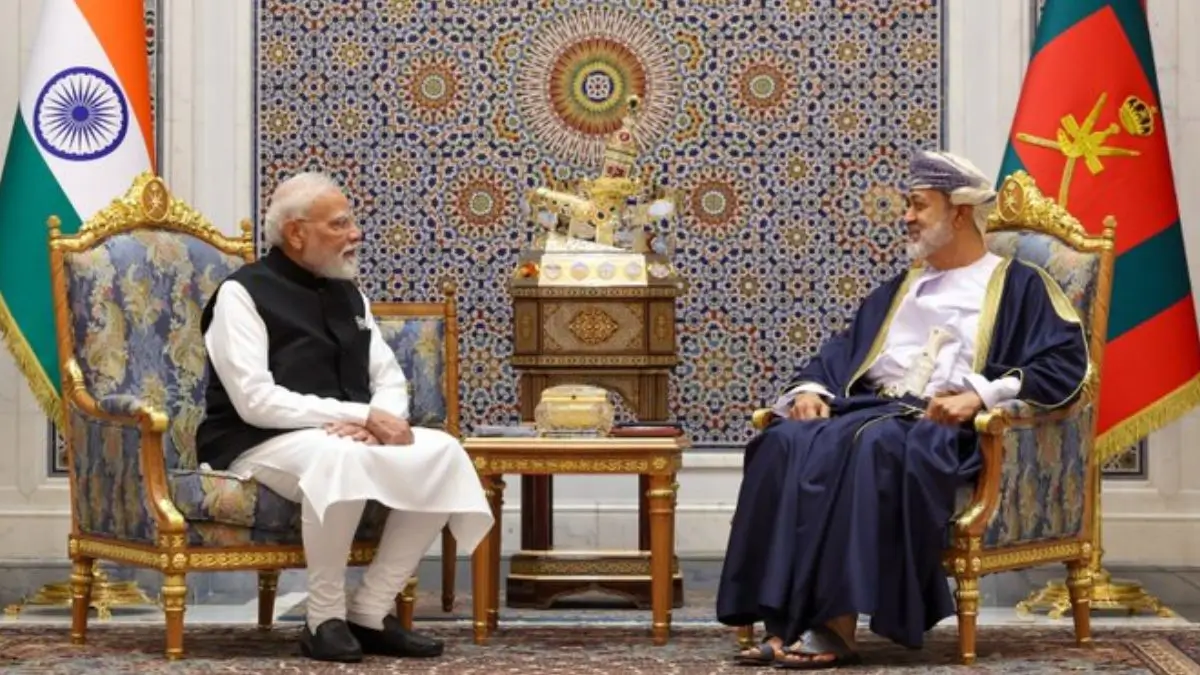
The agreement was signed in a ceremony attended by Prime Minister Shri Narendra Modi and His Majesty Sultan Haitham bin Tarik of Oman. The presence of high-ranking officials highlights the strategic and political importance of this partnership.
Commerce & Industry Minister Shri Piyush Goyal and Oman’s Minister of Commerce, Industry & Investment Promotion, H.E. Qais bin Mohammed Al Yousef, signed the CEPA. This is Oman’s first bilateral trade agreement since its Free Trade Agreement (FTA) with the USA in 2006. Notably, this is India's second Free Trade Agreement in the past six months, following the one with the UK.
Currently, the bilateral trade between India and Oman exceeds USD 10 billion, indicating significant potential for expansion. The CEPA aims to enhance this trade volume further.
Key beneficiary sectors include textiles, leather, footwear, gems and jewellery, engineering products, plastics, furniture, agricultural products, pharmaceuticals, medical devices, and automobiles. This initiative is expected to create jobs and empower MSMEs, artisans, and women-led enterprises.
India has committed to tariff liberalization on 77.79% of tariff lines, covering 94.81% of imports from Oman by value. Sensitive sectors are protected through exclusion lists and Tariff Rate Quotas (TRQs).
Excluded sectors include dairy, tea, coffee, rubber, tobacco, gold and silver bullion, jewellery, footwear, sports goods, and metal scraps.
Oman has made its first-ever comprehensive services commitments, covering 127 sub-sectors including computer-related services, business and professional services, audio-visual services, R&D services, education, and health services. This opens high-value opportunities for Indian service providers, as India currently accounts for only 5.31% of Oman’s services imports.
For the first time, Oman has offered extensive Mode 4 commitments, increasing the quota for Intra-Corporate Transferees from 20% to 50%. The stay for Contractual Service Suppliers has been extended from 90 days to two years, with further extensions possible. This liberalizes entry for professionals in sectors like accountancy, taxation, architecture, and medical services.
Oman permits 100% Foreign Direct Investment for Indian firms in major services sectors, facilitating the expansion of Indian companies.
The CEPA includes the first-ever commitment on traditional medicine across all modes, boosting India’s AYUSH and wellness sectors. It promotes medical value travel and fast-tracks pharmaceutical approvals. Furthermore, it includes mutual recognition arrangements for Halal certification and organic product certification.
The India-Oman CEPA strengthens India's economic footprint in the Gulf region and supports its strategy of signing FTAs with non-competing developed economies. This agreement is expected to enhance employment, exports, and supply chain resilience while positioning Oman as a strategic hub for India’s access to the Middle East and Africa.
Overall, the CEPA reinforces India’s commitment to inclusive growth while safeguarding sensitive domestic sectors.
Q1. What is the India-Oman CEPA?
Answer: The India-Oman Comprehensive Economic Partnership Agreement (CEPA) is a trade agreement aimed at enhancing economic ties, facilitating trade, and investment between India and Oman.
Q2. What are the key benefits of the CEPA for India?
Answer: The CEPA offers zero-duty access for Indian goods in Oman, creates job opportunities, and facilitates greater market access for Indian services and investments.
Q3. How will the CEPA impact bilateral trade?
Answer: The CEPA is expected to significantly boost bilateral trade, which currently exceeds USD 10 billion, by providing beneficial tariff treatments and enhanced market access.
Q4. What sectors are included in the CEPA commitments?
Answer: Key sectors include textiles, pharmaceuticals, engineering, and traditional medicine, among others, aimed at boosting trade and cooperation.
Q5. How does the CEPA support Indian professionals?
Answer: The CEPA enhances mobility for Indian professionals, allowing for longer stays and easier entry in various sectors, including healthcare and finance.
 Kutos : AI Assistant!
