

The Himalayas, often referred to as the "Water Tower of Asia," are currently in focus due to the alarming effects of climate change on their glaciers. Recent studies have shown that rising temperatures are accelerating glacier melt, which is crucial for sustaining numerous rivers across Asia. This issue is significant for UPSC aspirants as it is linked to both environmental policies and water resource management.
Understanding the Himalayas' role as the Water Tower of Asia is crucial for UPSC examinations. In the Prelims, questions may cover geographical facts and key rivers originating from this region. In the Mains, it is relevant to GS Paper I (Geography) and GS Paper III (Environment), addressing topics such as water resources, climate change impacts, and sustainable management. UPSC aspirants should study this topic to grasp the implications of environmental changes on water supply and regional stability.
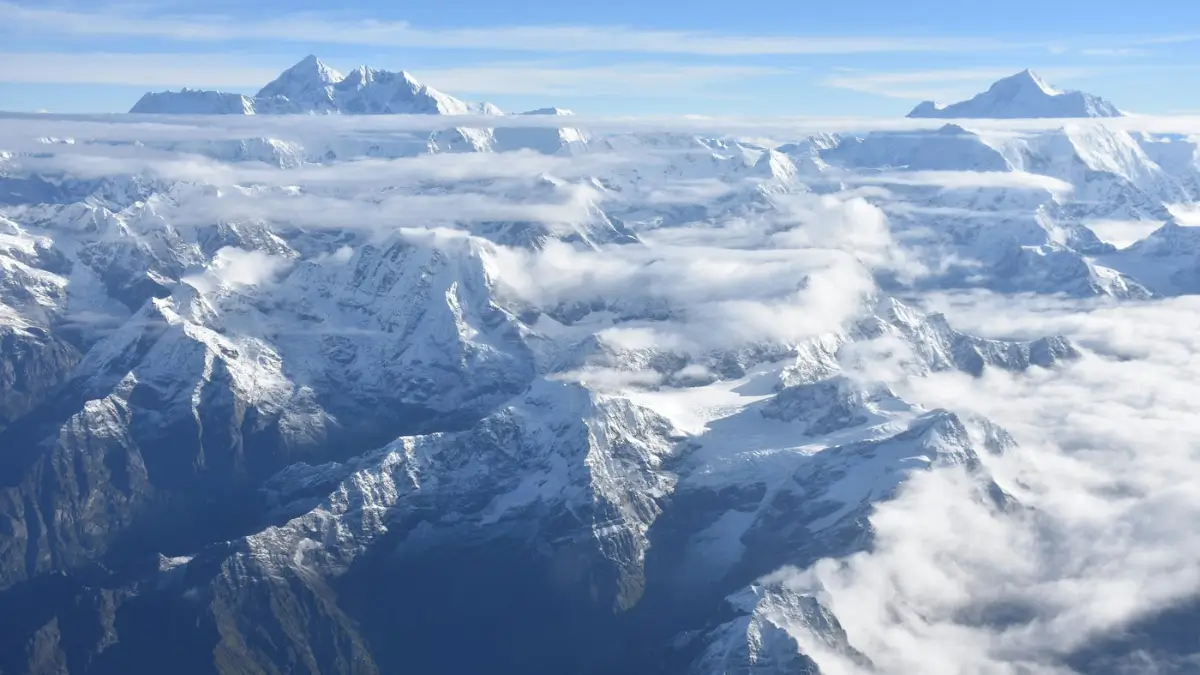
The Himalayas are the largest mountain range on Earth, containing the most extensive ice reserves outside the polar regions. They act as a critical water storage system, with thousands of glaciers that release water slowly throughout the year. This gradual melt supports major rivers like the Ganga, Indus, and Brahmaputra, ensuring a consistent water supply essential for millions of people and ecosystems across Asia. Without this natural reservoir, many regions would face severe water scarcity and ecological challenges.
In Prelims, candidates may be asked about the geographical features of the Himalayas, major rivers, and their significance. Mains questions may delve into causes and effects of climate change on these glaciers, implications for water security, and strategies for sustainable management of water resources in the region.
The melting of Himalayan glaciers due to climate change presents a cause-effect relationship with far-reaching implications. The reduction in glacier mass can lead to short-term flooding followed by long-term droughts, affecting agriculture, drinking water supplies, and energy production. This instability threatens the livelihoods of millions and poses a challenge to governance in managing shared water resources across national boundaries.
Addressing the challenges posed by climate change on the Himalayan glaciers requires comprehensive policies that emphasize sustainability and ecosystem balance. Collaborative international efforts are needed to manage this vital water resource effectively. Evidence-based policy frameworks should focus on climate adaptation, conservation, and resilient infrastructure to safeguard the future of water supply for the billions who depend on the rivers originating from this critical region.
Q1. Why are the Himalayas called the Water Tower of Asia?
Answer: The Himalayas are termed the Water Tower of Asia because they contain significant glaciers that store a vast amount of freshwater, feeding major rivers that support millions of people across Asia.
Q2. How do Himalayan glaciers contribute to water supply?
Answer: Himalayan glaciers act as natural reservoirs, storing water during winter and gradually releasing it during summer, ensuring a consistent flow in rivers even during low rainfall periods.
Q3. What impact does climate change have on the Himalayas?
Answer: Climate change is causing accelerated melting of Himalayan glaciers, which threatens long-term water supply, increases flood risks, and affects ecosystems and communities dependent on these water resources.
Q4. Which major rivers originate from the Himalayas?
Answer: Major rivers originating from the Himalayas include the Indus, Ganga, Brahmaputra, and others, which are crucial for drinking water, agriculture, and energy in South Asia.
Q5. Why is it important to protect the Himalayan environment?
Answer: Protecting the Himalayan environment is essential to maintain the water supply for billions of people, prevent ecological degradation, and ensure sustainable development in the region.
Question 1: What is the primary reason the Himalayas are referred to as the Water Tower of Asia?
A) They are the highest mountains in the world.
B) They store large amounts of ice and snow, feeding major rivers.
C) They are home to diverse wildlife.
D) They are important for tourism.
Correct Answer: B
Question 2: Which of the following rivers originates from the Himalayas?
A) Nile
B) Amazon
C) Ganga
D) Mississippi
Correct Answer: C
Question 3: What effect does accelerated glacier melt have on water resources?
A) It increases the water supply indefinitely.
B) It may cause short-term flooding followed by long-term droughts.
C) It has no significant effect.
D) It only affects biodiversity.
Correct Answer: B
 Kutos : AI Assistant!
