

The inauguration of the Namo Bharat Rapid Rail Transit System (RRTS) and the Delhi-Meerut Corridor on February 22, 2026, highlights a significant advancement in India's public transport infrastructure. This project is pivotal as it represents the first operational Regional Rapid Transit System in India, designed to enhance connectivity between major urban centers. Such developments align with the government's vision for sustainable urban mobility and economic growth.
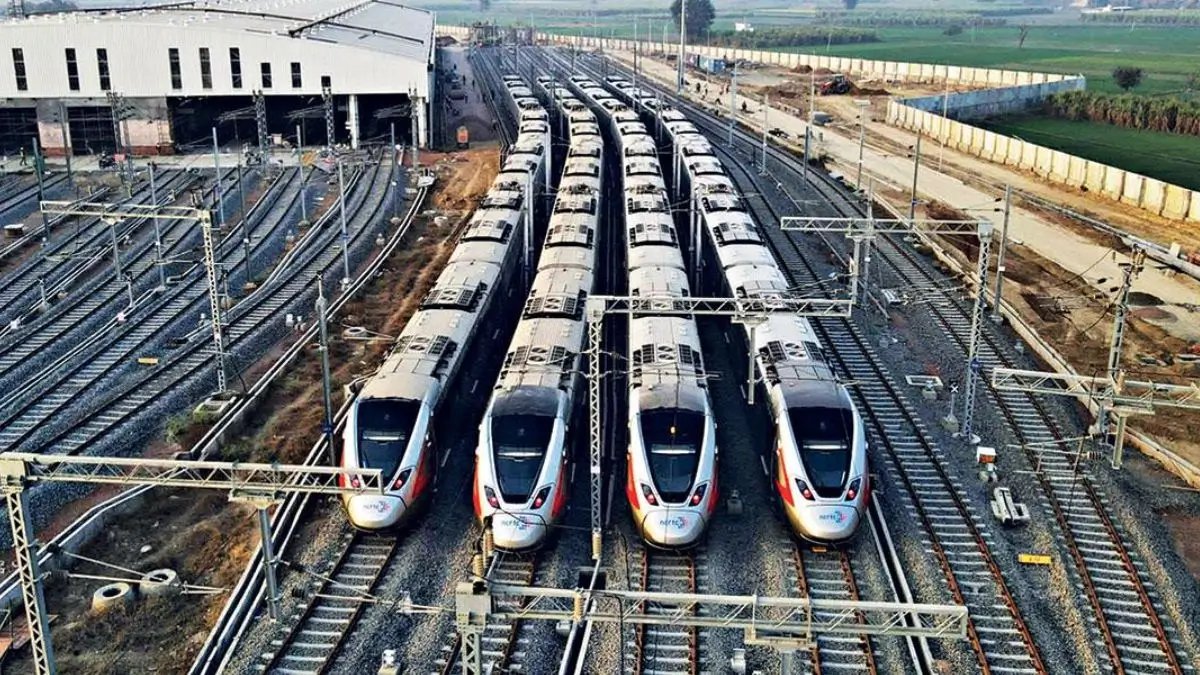
This topic is relevant for the UPSC Prelims as it touches upon infrastructure development and urban transport systems, which are essential aspects of national integration. For Mains, it relates to GS Paper III, focusing on infrastructure, economic development, and the role of technology in urban planning.
Why should a UPSC aspirant study this topic? Understanding the Namo Bharat RRTS is crucial for grasping the current trends in infrastructure development and their implications for economic growth and urban mobility.
The Namo Bharat RRTS is a cutting-edge project aimed at providing rapid transit across the Delhi-Meerut route. It integrates metro and regional rail services, allowing commuters to switch seamlessly between different modes of transport. This initiative is expected to significantly reduce travel times and enhance connectivity between urban areas, thus fostering economic integration and regional development.
In Prelims, questions may focus on factual aspects such as the specifics of the Namo Bharat RRTS and its operational features. Mains questions could delve into the causes and implications of such infrastructure projects, including their impact on urban development and economic integration.
The Namo Bharat RRTS represents a significant step towards improving urban mobility in India. The project not only reduces travel time but also fosters economic integration between Delhi and Meerut, encouraging people to reside further from urban centers. This shift can alleviate housing pressures in metropolitan areas and promote balanced regional development. The emphasis on women's participation in operations also highlights a progressive approach towards gender equality in infrastructure sectors.
The Namo Bharat RRTS is a transformative project that aligns with India's goals of sustainable urban development and enhanced connectivity. Future policies should focus on further integrating multi-modal transport systems, ensuring resilience and adaptability in urban infrastructure. Emphasizing evidence-based policy-making will enhance the sustainability of such projects, ultimately leading to improved quality of life for citizens.
Q1. What is the significance of the Namo Bharat RRTS?
Answer: The Namo Bharat RRTS is significant as it marks the first operational rapid transit system in India, enhancing connectivity between Delhi and Meerut, thereby promoting economic integration and urban mobility.
Q2. How does the Namo Bharat RRTS contribute to women empowerment?
Answer: The Namo Bharat RRTS highlights women empowerment by employing a majority of women in train operations and station management, showcasing their pivotal role in the transport sector.
Q3. What are the key benefits of the Delhi-Meerut Corridor?
Answer: Key benefits include reduced travel time, improved connectivity between cities, and enhanced economic opportunities, making commuting faster and more convenient.
Q4. What is the impact of the Namo Bharat RRTS on employment generation?
Answer: The project is expected to create numerous job opportunities through infrastructure development, contributing to industrial growth and economic stability in Uttar Pradesh.
Q5. What are the core features of the Namo Bharat RRTS?
Answer: Core features include an integrated transport model, direct travel from the same platform, and seamless connections to metro and bus services, enhancing overall commuter experience.
Question 1: What does the Namo Bharat RRTS primarily aim to improve?
A) Agricultural output
B) Urban mobility and connectivity
C) Educational facilities
D) Health infrastructure
Correct Answer: B
Question 2: Which cities are directly connected by the Namo Bharat RRTS?
A) Delhi and Agra
B) Meerut and Ghaziabad
C) Delhi and Meerut
D) Noida and Ghaziabad
Correct Answer: C
Question 3: What aspect of the Namo Bharat RRTS emphasizes gender equality?
A) Employment of women in operations
B) Fare discounts for women
C) Women-only trains
D) Special facilities for women
Correct Answer: A
Question 4: In which year was the Namo Bharat RRTS inaugurated?
A) 2024
B) 2025
C) 2026
D) 2027
Correct Answer: C
 Kutos : AI Assistant!
