

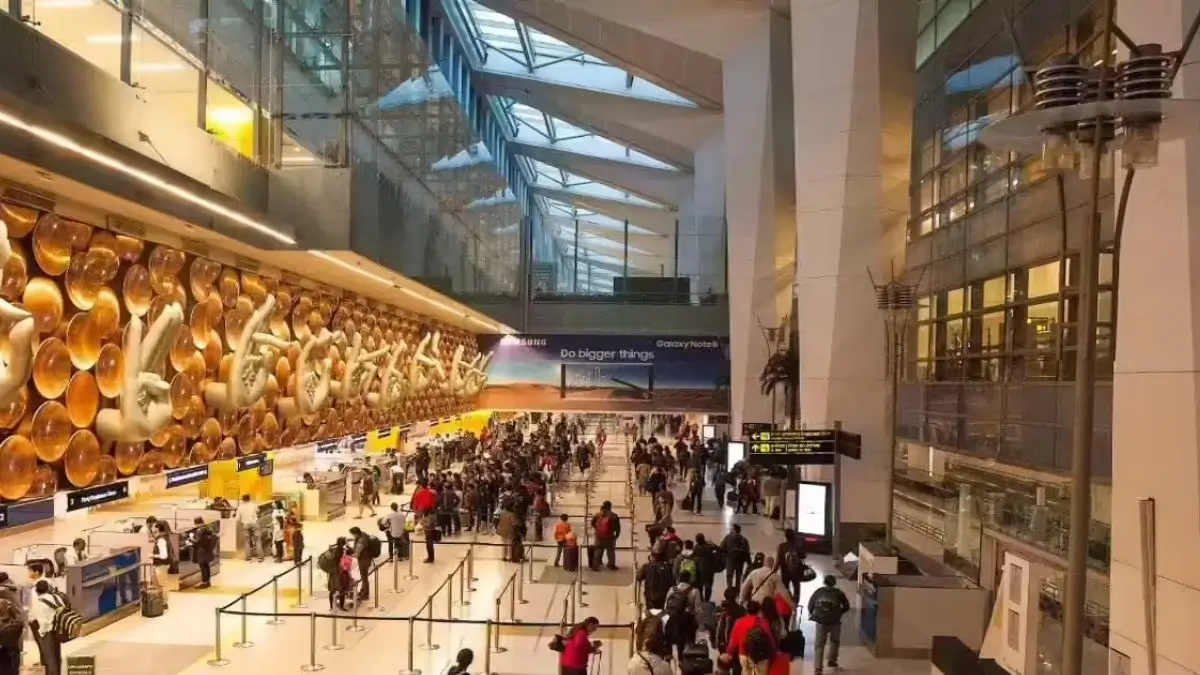
Delhi Airport has recently been ranked as the 5th-busiest airport in the Asia Pacific region for 2025 according to OAG data. This significant ranking underscores the rapid growth in India's aviation sector, particularly in post-pandemic recovery. The increase reflects the rising domestic air travel demand driven by a growing middle class and the expansion of capacity by airlines like IndiGo.
This topic is relevant for both UPSC Prelims and Mains. In Prelims, it connects to static aspects of the aviation sector and current events. For Mains, it is pertinent to GS Paper III, focusing on infrastructure and economic development. UPSC aspirants should study this topic to understand the dynamics of India's aviation industry and its implications for economic growth.
Delhi's Indira Gandhi International Airport has seen a remarkable increase in seat capacity, reaching 46.18 million in 2025, which is a significant improvement from its 2019 ranking of 9th. The OAG's measurements reflect scheduled airline seat supply rather than passenger numbers, highlighting structural shifts in aviation patterns within the Asia Pacific region. Factors such as affordable airfares and improved airport infrastructure have played crucial roles in this growth.
In the Prelims, questions may focus on factual aspects such as airport rankings and seat capacities. Mains exams may explore causes of growth, implications for economic development, and challenges faced by the aviation sector in India.
The rise of Delhi Airport to a top rank showcases the cause-effect relationship between India's economic growth and its aviation expansion. The implications include increased regional connectivity, economic benefits from tourism, and the necessity for sustainable development in infrastructure to accommodate future growth.
To sustain this growth trajectory, evidence-based policies are needed to enhance airport infrastructure and address environmental concerns. Ensuring resilience in the aviation sector will require a focus on sustainability and adaptive strategies to improve connectivity while minimizing ecological impacts.
Q1. What is the ranking of Delhi Airport in 2025?
Answer: Delhi Airport is ranked 5th in the Asia Pacific for 2025, with a reported capacity of 46.18 million seats.
Q2. What factors have contributed to Delhi Airport's growth?
Answer: Key factors include increased domestic air travel demand, aggressive expansion by IndiGo, and improved airport infrastructure.
Q3. How does the OAG measure airport rankings?
Answer: The OAG measures airport rankings based on scheduled airline seat capacity rather than passenger footfall, providing insights into operational capacity.
Q4. Why is the growth of the aviation sector important for India?
Answer: The growth of the aviation sector enhances connectivity, stimulates economic development, and supports tourism, making it vital for India's economic landscape.
Q5. What implications does the ranking of Delhi Airport have for global aviation?
Answer: The ranking indicates a shift in the global aviation landscape, reflecting India's growing influence and the changing dynamics of air travel in the Asia Pacific region.
Question 1: Which airport is ranked 5th in the Asia Pacific for 2025?
A) Singapore Changi Airport
B) Seoul Incheon International Airport
C) Delhi Airport
D) Bangkok Suvarnabhumi Airport
Correct Answer: C
Question 2: What was Delhi Airport's rank in 2019?
A) 5th
B) 6th
C) 8th
D) 9th
Correct Answer: D
Question 3: Which airline's expansion significantly contributed to Delhi Airport's growth?
A) Air India
B) IndiGo
C) SpiceJet
D) Vistara
Correct Answer: B
Question 4: What does OAG stand for in the context of airport rankings?
A) Official Airport Group
B) Operational Airline Gateway
C) Official Aviation Group
D) OAG Aviation Worldwide
Correct Answer: D
Question 5: What is a significant factor driving the demand for air travel in India?
A) Decreased population
B) Economic slowdown
C) Expanding middle class
D) High airfares
Correct Answer: C
 Kutos : AI Assistant!
